- 4192 Devonwood Way, Ashburn, Virginia, 20148
- Helpline: +1 (703) 665-3747
Lessons learned from the COVID-19 pandemic – Provision of pharmaceutical care services in crisis
- Home
- Back to Journal
- Article Details
Abstract
The COVID-19 pandemic has affected the provision of healthcare services to tackle the spread of the virus. Community pharmacists needed to take new roles to ensure the needs of the public and secure the supply of medicines. The aim of this qualitative study was to identify the main problems in the provision of pharmaceutical care services during the COVID-19 pandemic and possible suggestions for improvement in future critical situations. In-depth semi-structured interviews were conducted among pharmacists (n=21) and experts (n=10). Thematic text analysis was carried out and the obtained units were systematized by subcategories. The results outlined four types of lessons learned during the first wave of COVID-19: transparent and on time communication with the public; clear instructions from government; sufficient stock of medicines and personal protective equipment; qualified personnel to tackle the crisis and maintaining the provision of the service. Recommendations for the future to ensure quality pharmaceutical care service in the crisis covered following aspects: to have a crisis plan for pharmacies; to use and create appropriate communication channels to improve the flow of information; to create reserve lists of professionals; to identify the critical pharmacies to maintain the service in all regions; to appoint a common representative for professional organizations; to define healthcare resources and to develop supportive measures to ensure continuous care of the vital healthcare services in any situation. In conclusion, the problems experienced by pharmacists during the COVID-19 pandemic were complex, however, it gave a good insight how to better prepare for the future health crisis.
Keywords: Pharmaceutical care, healthcare crisis, COVID-19, Estonia.
Introduction
Healthcare services across the world were severely impacted by the first wave of COVID-19 pandemic in spring 2020. To prevent a rapidly spreading virus, a number of restrictions were introduced, starting with social distancing and wearing face masks. Primary health care services were provided at a distance or their provision was partially interrupted [1].
Pharmacists were among the health professionals who adapted quickly to the epidemiological situation, providing uninterrupted access to medicines, thus supporting the treatment of both chronic and acute diseases during the COVID-19 pandemic. As part of the provision of health care and other services, e.g., social services, was more or less stopped, additional tasks were added to pharmacists around the world to cover activities related to the prevention and resolution of patients’ health problems. In many European countries (Austria, Ireland, France, Portugal), in Canada and the United States the pharmacists extended prescriptions and prescribed certain medicines to enable continuous care of chronic patients. [2–5]. Community pharmacists also contribute in various ways to COVID-19 control with antigen testing and vaccination [4].
As the threat of the COVID-19 pandemic has not diminished, it is important to collect existing experiences and develop guidelines, which would enable similar crises to be dealt more effectively in the future.
The aim of this qualitative study was to identify the main problems in the provision of pharmaceutical care services during the COVID-19 pandemic and possible suggestions for improvement in future critical situations.
Materials and Methods
Study sample and data collection
Qualitative in-depth semi-structured interviews were performed among 21 pharmacists and 10 different stakeholders (named experts in this study) of healthcare or pharmaceutical sector. Purposeful sampling was used with regard to gain representation within different stakeholder groups.
The interviews were conducted by three different individual researchers via telecommunications tools, i.e., Skype, Skype Business, Teams, Zoom and phone call. The duration of interviews was from 20 to 110 minutes. All conducted interviews were audio-recorded and transcribed verbatim. After transcription, all audio files were deleted and each interview was coded.
Data review and analysis were done in conjunction with data collection. It helped to assess whether data saturation was achieved and when it was acceptable to stop data collection.
Study instrument
The interview guide consisted of three themes (the general organization of pharmacy service provision, the quality of provided pharmacy services and the role of pharmacy prior to and during the COVID-19 pandemic) with 18 open-ended questions helping to define the areas to be explored, but also allowed to follow interesting thematic topics that participants discussed.
Data analysis
As a result of the thematic text analysis the units obtained were systematized into subcategories. The data collected were then re-analyzed and re-examined, and the most important subcategories were grouped into main categories.
In terms of results, this article presents only condensed information from the pharmacists’ replies about the main problems of the COVID-19 crisis and the ways to solve the problems.
Ethical considerations
The research aimed to understand professional opinions and perception about the change of community pharmacy service provision during COVID-19 first outbreak without any focus on personal data. Therefore, no official approval from ethics committee was needed according to local regulations. Nevertheless, the researchers followed the principles of medical and research ethics and the local Personal Data Protection Act [6–8]. All the participants were aware about their voluntary participation and their right to withdraw their participation at any time. Before data collection, participants were introduced to the aims and methods of the research. In addition, participants were asked the permission to record the interview and notified that the audio files with their interviews would be deleted immediately after verbatim transcription and regular and appropriate oversight for the carried-out research takes place. Written informed consent from participants was gathered prior interviews. All collected data was stored in password-secured cloud server of University of Tartu and only researchers had access to collected data.
Results and Discussion
During the first wave of the coronavirus in the spring of 2020, various problems emerged that directly affected the provision and availability of primary healthcare services to patients. The pharmaceutical care services were maintained, but the pharmacists who participated in the study pointed out various problems in providing the service. The participants described four types of lessons related to different levels that influenced service provision during the first wave of pandemic (Figure 1).
As seen from Figure 1, the need to keep service provision sustainable and ongoing is important in all levels and it is expected that also government and society in general would work and act towards this common goal in a situation where other healthcare services remain unavailable. In many countries, pharmacists were acting as other frontline healthcare workers and played therefore a crucial role in the management of COVID-19 pandemic during spring 2020 [9]. It is evident that all-level support to ensure the availability and adequacy of a healthcare service provided by community pharmacies is crucial.
The pharmacists also pointed out possible suggestions for improvement to ensure quality pharmaceutical care in critical conditions in the future (Table 1).
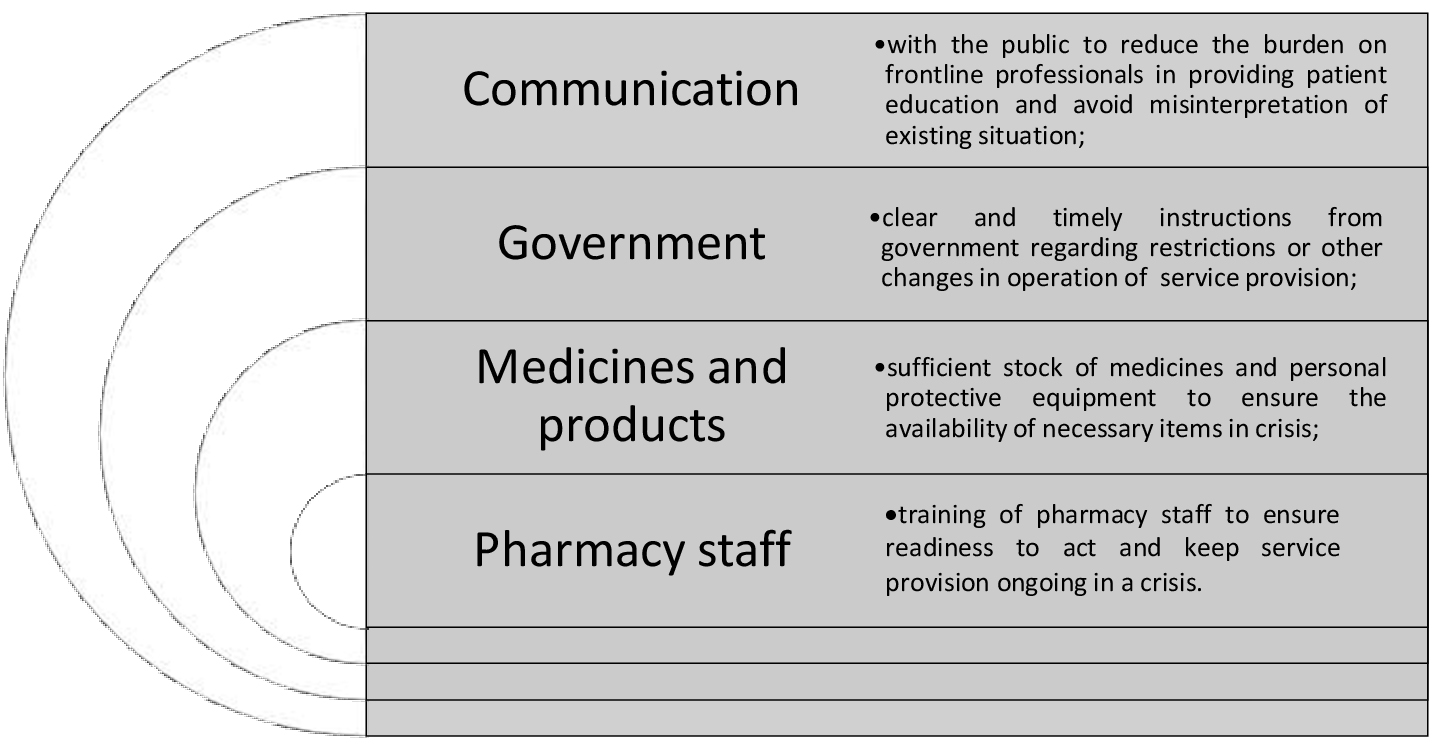
Figure 1. Lessons learned during the first wave of COVID-19 influenced pharmaceutical care provision in Estonia
Table 1. Suggestions of community pharmacists for improvement to ensure quality pharmaceutical care services in the crisis in the future
|
Suggestions for improvement |
Description of the improvement |
|
Restrictions for dispensing of medicines |
In the future to consider reintroducing restrictions with more clear guidelines for pharmacists during pandemic. |
|
Development of crisis management plans for pharmacies |
Develop instructions based on the experience gained in order to ensure optimal and systematic activities in crisis. |
|
Compiling reserve lists of vacant professionals |
Create reserve lists of professionals to work in the pharmacy sector in an emergency. |
|
Designation of responsible pharmacies in region |
Regionally identify pharmacies that would remain open in the worst case scenario to maintain service availability in all regions. |
|
Appointment of a common representative for professional organizations |
A single representative of professional organizations will ensure more coherent messages and objectives that can be extended to most pharmacists. |
|
Agreement on communication channels |
Agreeing on specific communication channels and tools would allow important information to be transmitted quickly and efficiently to all healthcare professionals. |
|
Joint communication channels for healthcare professionals |
Creating reliable and convenient direct channels for pharmacists and general practitioners would support better cooperation and a more and coherent communication with patients. |
|
Clear definition of healthcare resources at national level |
Defining resources nationally would make it possible to map the functions that can be implemented more effectively in crisis in the interests of society and its health. |
|
Development of supportive measures |
The government should prioritize provision of the vital healthcare services in any situation, allowing different supportive measures for provision of services. |
Pharmacists considered important to have a crisis plan for pharmacies. A well-developed action plan helps to keep the service available consistently and to act systematically and quickly. An international experience showed that in addition to the lack of a clear plan, pharmacies did not receive additional funding to maintain the service during the crisis. Key barriers to pharmacy activities included the requirements to restructure the physical environment to ensure social distancing [10].
Pharmacists welcomed the possibility for a competent person ( pharmacist, pharmacy manager)in a pharmacy to go to another pharmacy with a higher workload without restriction. In order to support heavy-duty pharmacies, lists of people who have the necessary knowledge or skills to help pharmacies in an emergency should be established. The persons on the list should be provided with the necessary training or instructions to perform their tasks.
As seen from Figure 1 and Table 1, one of the main issues that appear on different levels and angles, is related to communication. It is important to agree on specific communication channels and tools to forward urgent information between the state, pharmaceutical companies and pharmacies, so that important information would reach the recipients quickly and efficiently. In previous research, it has been shown that public health messaging during public health crisis should aim to increase trust and source credibility but also operate to centralize, unify, and streamline delivery of information [11]. A direct channel between pharmacists and other healthcare professionals should also be established to support better cooperation between the healthcare system and more coherent messages to the patient. As seen in previous research, there is need for effective collaboration between different healthcare professionals as well between healthcare professionals and patients [12] as inefficient health communication may lead to the gaps in the management with pandemic situation, especially for vulnerable groups [13].
Many participants in the study pointed out the fragmentation of the professional sector as a weakness of the pharmacy sector, where pharmacists do not have a single clear representative whose goals and messages can be extended to all pharmacists.
As the findings showed, there is no common national understanding of pharmacists and their role in the health care system in Estonia. There is need for clearly defined and identified nationwide understanding regarding healthcare human resources in the context of both regular situation (which has demographically challenging perspectives) as well for potential future crisis. It would also support the development of a societal vision of pharmacists as health professionals. At the same time, the prioritization of vital healtcare services, including pharmaceutical care services, and their supplies is important by government in both regular and crisis situations.
References
- Paudyal V, Cadogan C, Fialová D, Henman M.C, Hazen A, Okuyan B, Lutters M, and Stewart D. (2021) Provision of clinical pharmacy services during the COVID-19 pandemic: Experiences of pharmacists from 16 European countries. Research in social & administrative pharmacy 17: 1507–1517. [View]
- OECD (2020), Realising the Potential of Primary Health Care, OECD Health Policy Studies, OECD Publishing, Paris. [View]
- Merks P, Jakubowska M, Drelich E, ?wieczkowski D, Bogusz J, Bilmin K, Sola K.F et al. (2021) The legal extension of the role of pharmacists in light of the COVID-19 global pandemic. Research in social & administrative pharmacy 17: 1807–1812. [View]
- Pharmaceutical Group of European Union, Position Paper on the Role of Community Pharmacists in COVID-19 - Lessons Learned from the Pandemic, Available online: https://www.pgeu.eu/wp-content/uploads/2020/03/PGEU-Position-Paper-on-on-the-Lessons-Learned-from-COVID-19-ONLINE.pdf (accessed 10 August 2021).
- Medical Brief, Act amendment allows extension of expiring prescriptions from 6 to 12 months, (2020), Available online: https://www.medicalbrief.co.za/archives/act-amendment-allows-extension-of-expiring-prescriptions-from-6-to-12-months/ (accessed 4 June 2021).
- Beauchamp T.L (2015) The Four Principles Approach to Health Care Ethics, Principles of Health Care Ethics, Chichester: John Wiley & Sons Ltd.
- World Medical Association, WMA Declaration of Helsinki - Ethical Principles for Medical Research Involving Human Subjects, (2013), Available online: https://www.wma.net/policies-post/wma-declaration-of-helsinki-ethical-principles-for-medical-research-involving-human-subjects/
- Estonia: Riigi Teataja, (2019), Personal Data Protection Act, Available online: https://www.riigiteataja.ee/en/eli/523012019001/consolide.
- Herzik K.A and Bethishou L. (2021) The impact of COVID-19 on pharmacy transitions of care services. Research in social & administrative pharmacy 17: 1908–1912. [View]
- Hoti K, Jakupi A, Hetemi D, Raka D, Hughes J, and Desselle S. (2020) Provision of community pharmacy services during COVID-19 pandemic: a cross sectional study of community pharmacists’ experiences with preventative measures and sources of information. International journal of clinical pharmacy 42: 1197–1206. [View]
- Van Scoy L.J, Snyder B, Miller E.L, Toyobo O, Grewel A, et al. (2021) Public anxiety and distrust due to perceived politicization and media sensationalism during early COVID-19 media messaging, Journal of Communication in Healthcare. [View]
- Elbeddini A, Botross A, Gerochi R, et al. (2020), Pharmacy response to COVID-19: lessons learnt from Canada. J of Pharm Policy and Pract 13: 76. [View]
- Reddy B.V, and Gupta, A. (2020) Importance of effective communication during COVID-19 infodemic. Journal of family medicine and primary care 9: 3793–3796. [View]